
Engineering Mental Health: Evidence Over Intuition
Exercise has the same antidepressant effect size as SSRIs in multiple meta-analyses. 1
This has been replicated across dozens of studies, in different populations, using different exercise modalities. The finding is not marginal. A 2023 umbrella review of 97 systematic reviews found exercise interventions reduced depression symptoms by an effect size of 0.43 – comparable to antidepressant medication. 2
We prescribe antidepressants as the first intervention in primary care. Exercise is mentioned as a lifestyle suggestion, if at all. This ordering is not driven by the evidence.
Mental health, like physical health, has an evidence hierarchy. Not all interventions are equal. Not all popular practices have research support. These are the ones that do.
TL;DR
Mental health has an evidence hierarchy. At the top: exercise, sleep, and social connection – all with effect sizes matching or exceeding pharmacological interventions. The gap between what we know works and what gets prescribed first is one of medicine’s cleaner failures.
I. The Evidence Hierarchy
Ranked by effect size and replication quality:
1. Aerobic exercise — Effect size comparable to SSRIs for mild-to-moderate depression. 30 minutes, 3× per week. Lower relapse rate than medication at 10-month follow-up. 1 Mechanism: BDNF (brain-derived neurotrophic factor) upregulation, hippocampal neurogenesis, HPA axis normalization, norepinephrine and dopamine modulation.
2. Sleep optimization — REM sleep specifically processes emotional memory and recalibrates the amygdala’s threat sensitivity. One night of total sleep deprivation increases amygdala reactivity to negative stimuli by 60%. 3 Chronic sleep restriction (6 hours for 2 weeks) produces sustained mood deterioration. Sleep is not a consequence of good mental health – it is a driver of it.
3. Social connection — Causal for depression, cognitive decline, and anxiety. The strongest effect is through perceived support quality, not contact frequency. (Covered in full in the social connection post.)
4. Cognitive Behavioral Therapy (CBT) — Gold standard for anxiety and depression. 12–20 sessions produce durable structural changes in the cognitive patterns underlying the disorders. 4 Effect is sustained post-treatment without pharmacological dependency.
5. MBSR (Mindfulness-Based Stress Reduction) — 8-week structured program. Strong evidence for anxiety, depression, chronic pain, and stress biomarkers.
6. Pennebaker expressive writing — 200+ validated studies. Accessible, free, and effective for stress-related health outcomes.
7. Breathwork — Strong evidence for acute stress regulation. (Covered in the stress and recovery post.)
II. The Pennebaker Protocol
James Pennebaker at the University of Texas has studied expressive writing since the mid-1980s. The protocol has been validated in more than 200 studies across populations ranging from healthy college students to cancer patients to trauma survivors.
The protocol:
- Write about your deepest thoughts and feelings about a stressful or traumatic experience
- 15–20 minutes per session
- 3–5 consecutive days
- No grammar rules, no editing – write continuously
- The event can be recent or decades old
Documented outcomes: Fewer physician visits, improved immune markers (T-lymphocyte activity), reduced PTSD and anxiety symptoms, better management of chronic conditions, and improved outcomes in groups as diverse as laid-off engineers and HIV-positive men. 5
Why it works: Writing forces narrative construction – converting disorganized emotional memory (stored in the amygdala as raw sensory fragments) into a coherent temporal story (processed through the prefrontal cortex and hippocampus). This transfer reduces amygdala-driven intrusive re-experiencing and lowers the physiological arousal associated with the memory. 6
Timing: After stressful events, not during. The protocol works best when there is enough distance to narrate rather than just react.
III. CBT Micro-Practice
Cognitive Behavioral Therapy is the most replicated psychotherapy for anxiety and depression. Its core mechanism is interrupting the automatic thought-emotion-behavior cycle by inserting conscious evaluation at the thought stage.
The thought record (5 minutes):
- Situation: What happened?
- Automatic thought: What did my mind say automatically?
- Emotional response: What emotion did that produce, and how intense (0–100%)?
- Evidence for the thought: What actually supports this interpretation?
- Evidence against: What contradicts it, or makes it less certain?
- Reframed thought: Given the evidence, what is a more accurate interpretation?
- Emotional response after reframe: Same emotion, now what intensity?
The reduction in intensity between step 3 and step 7 is the therapeutic mechanism. Repeated use restructures the automatic thought patterns themselves over weeks to months.
Behavioral activation: Depression reduces activity, which reduces reward signals, which deepens depression. Behavioral activation interrupts this cycle by scheduling valued activities before motivation returns – acting despite the state, not after it improves.
IV. Negative Visualization and Stress Inoculation
Negative visualization (premeditatio malorum): A Stoic practice with validated psychological research backing. Regularly imagining the loss of things you currently value – health, relationships, career, freedom – produces two effects: increased present-moment appreciation for what you have, and reduced catastrophic reaction when loss eventually occurs. 7
Stress reframing: A 2014 Harvard study by Alison Wood Brooks found that labeling anxiety as “excitement” before high-stakes performance improved performance measurably compared to labeling it “anxiety” or attempting to calm down. 8 The physiological state (elevated HR, arousal, activation) is identical – the cognitive label changes the behavioral output. The body is not the problem; the interpretation is.
Voluntary discomfort: Periodic deliberate exposure to discomfort – cold, fasting, physical challenge – builds tolerance for discomfort in non-physical domains. This is hormesis applied to the mind: moderate stress that strengthens rather than breaks. 9
V. MBSR and Structural Brain Changes
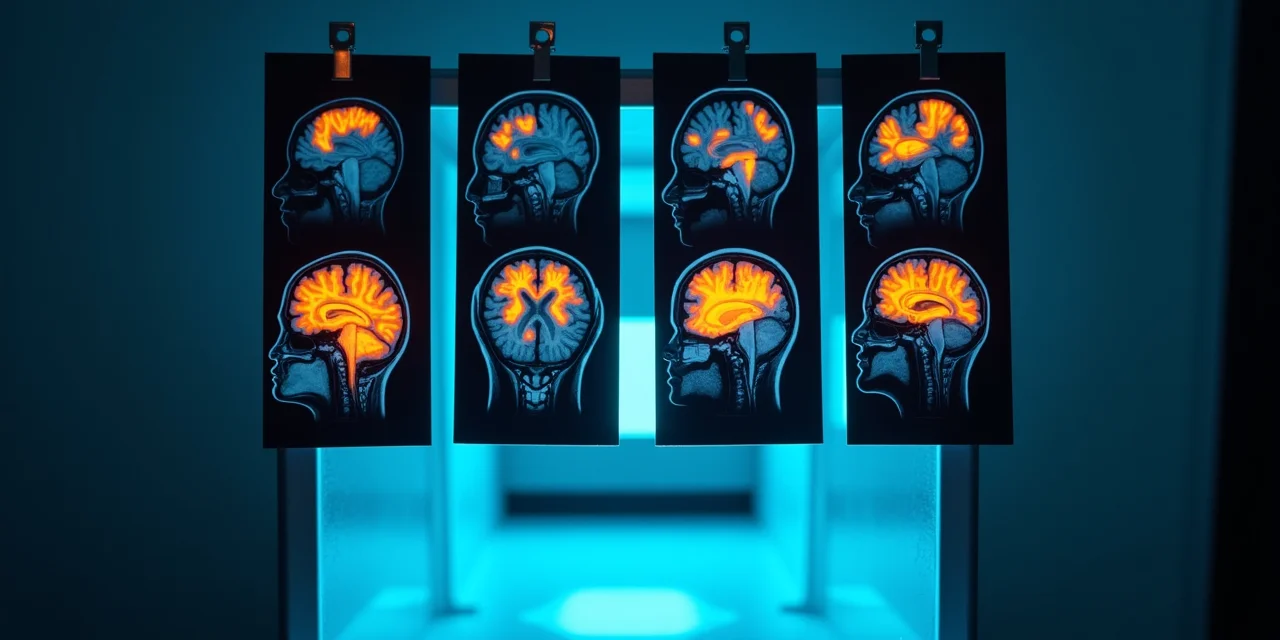
Eight weeks of Mindfulness-Based Stress Reduction (8 sessions, approximately 2.5 hours each, plus daily home practice) produces documented structural changes in the brain.
Sara Lazar’s findings at Harvard:
- Reduced amygdala gray matter density (associated with reduced stress reactivity) 10
- Increased prefrontal cortex density (associated with improved emotional regulation)
- Increased hippocampal density (associated with improved memory and emotional processing)
- These are structural changes, not just functional – detectable on MRI
Cortisol: MBSR reduces resting cortisol levels by approximately 15% after 8 weeks. 11
The mechanism: MBSR trains metacognition – the ability to observe thoughts and emotions without being automatically controlled by them. The practice does not eliminate anxiety or reactivity; it inserts a gap between stimulus and response where choice becomes possible.
VI. Journaling Protocols With Evidence
Positive affect journaling: 15–20 minutes writing about positive events and their meaning. Multiple RCTs show reductions in anxiety, depression, and perceived stress, and improvements in health outcomes. 12
Specificity matters: “Grateful for my colleague defending my idea in the meeting” is more effective than “grateful for my friends.” Specificity forces genuine recollection rather than habitual statement. The cognitive work of retrieving the specific memory is part of the mechanism.
Prompted CBT journaling: Situation → Thought → Feeling → Evidence → Reframe. A structured 5-minute daily entry that builds the thought-record habit outside of formal therapy sessions.
The Minimum Protocol
30 minutes of aerobic exercise, 3 times per week. 7–8 hours of sleep. One meaningful social interaction per day. 10 minutes of NSDR or meditation daily. Pennebaker writing protocol in the month following any significant stressor.
This is not a supplement stack. It is not a productivity system. It is the minimum dose of evidence-backed inputs at which the mental health biology starts working correctly.
References
Medical disclaimer: This post is for informational purposes only and does not constitute medical advice. The protocols described here are based on published research and expert commentary, not clinical recommendations. Consult your physician before changing medications, supplements, exercise regimens, or any other health intervention. Individual circumstances vary — professional guidance matters.
FAQ
When should someone seek professional help rather than self-directed protocols?
When symptoms are severe enough to impair daily functioning (work, relationships, self-care), when there are thoughts of self-harm, when a protocol applied consistently for 4–8 weeks produces no improvement, or when the underlying cause is biological (thyroid dysfunction, hormonal imbalance, nutritional deficiency) and requires diagnosis. The protocols here are most effective for mild-to-moderate difficulties and for maintenance and prevention. They do not replace clinical care for serious conditions.
Does meditation require specific training to be effective?
Apps (Waking Up, Headspace) produce measurable benefits with no prior training. The MBSR studies use structured instructor-led programs. Both work; the structured 8-week program produces larger and more durable effects. For someone starting out, a guided app provides enough structure to experience the effect before investing in a formal course.
How long does it take to see results from the minimum protocol?
Exercise effects on mood appear within 2–4 weeks. Sleep improvement is often immediate (within days of consistent protocol). Social connection effects on loneliness are near-immediate with consistent daily contact. Meditation and journaling produce measurable changes at 4–8 weeks. The minimum protocol is not a long-term commitment before seeing results – most inputs produce signal quickly.
-
Blumenthal, J. A., et al. (2007). Exercise and pharmacotherapy in the treatment of major depressive disorder. Psychosomatic Medicine, 69(7), 587–596. ↩ ↩2
-
Noetel, M., et al. (2023). Effect of exercise for depression: systematic review and network meta-analysis of randomised controlled trials. BMJ, 382, e075847. ↩
-
Yoo, S. S., et al. (2007). The human emotional brain without sleep – a prefrontal amygdala disconnect. Current Biology, 17(20), R877–R878. ↩
-
Hofmann, S. G., et al. (2012). The efficacy of cognitive behavioral therapy. Cognitive Therapy and Research, 36(5), 427–440. ↩
-
Pennebaker, J. W., & Smyth, J. M. (2016). Opening Up by Writing It Down. Guilford Press. ↩
-
Lieberman, M. D., et al. (2007). Putting feelings into words: affect labeling disrupts amygdala activity in response to affective stimuli. Psychological Science, 18(5), 421–428. ↩
-
Irvine, W. B. (2009). A Guide to the Good Life: The Ancient Art of Stoic Joy. Oxford University Press. (Also: Oettingen, G. (2014). Rethinking Positive Thinking. Penguin.) ↩
-
Brooks, A. W. (2014). Get excited: reappraising pre-performance anxiety as excitement. Journal of Experimental Psychology: General, 143(3), 1144–1158. ↩
-
Calabrese, E. J. (2013). Hormetic mechanisms. Critical Reviews in Toxicology, 43(7), 580–606. ↩
-
Holzel, B. K., et al. (2011). Mindfulness practice leads to increases in regional brain gray matter density. Psychiatry Research: Neuroimaging, 191(1), 36–43. ↩
-
Carlson, L. E., et al. (2007). One year pre-post intervention follow-up of psychological, immune, endocrine and blood pressure outcomes of mindfulness-based stress reduction in breast and prostate cancer outpatients. Brain, Behavior, and Immunity, 21(8), 1038–1049. ↩
-
Smyth, J. M., et al. (2018). Online positive affect journaling in the improvement of mental distress and well-being in general medical patients. JMIR Mental Health, 5(4), e11290. ↩
